By Widhibek
The night sky always holds its own special charm, perhaps because our eyes are not accustomed to gazing upon scenes bathed in soft light against a backdrop of countless stars. Yet, there is one phenomenon that never fails to captivate me—and perhaps you as well: the Milky Way.
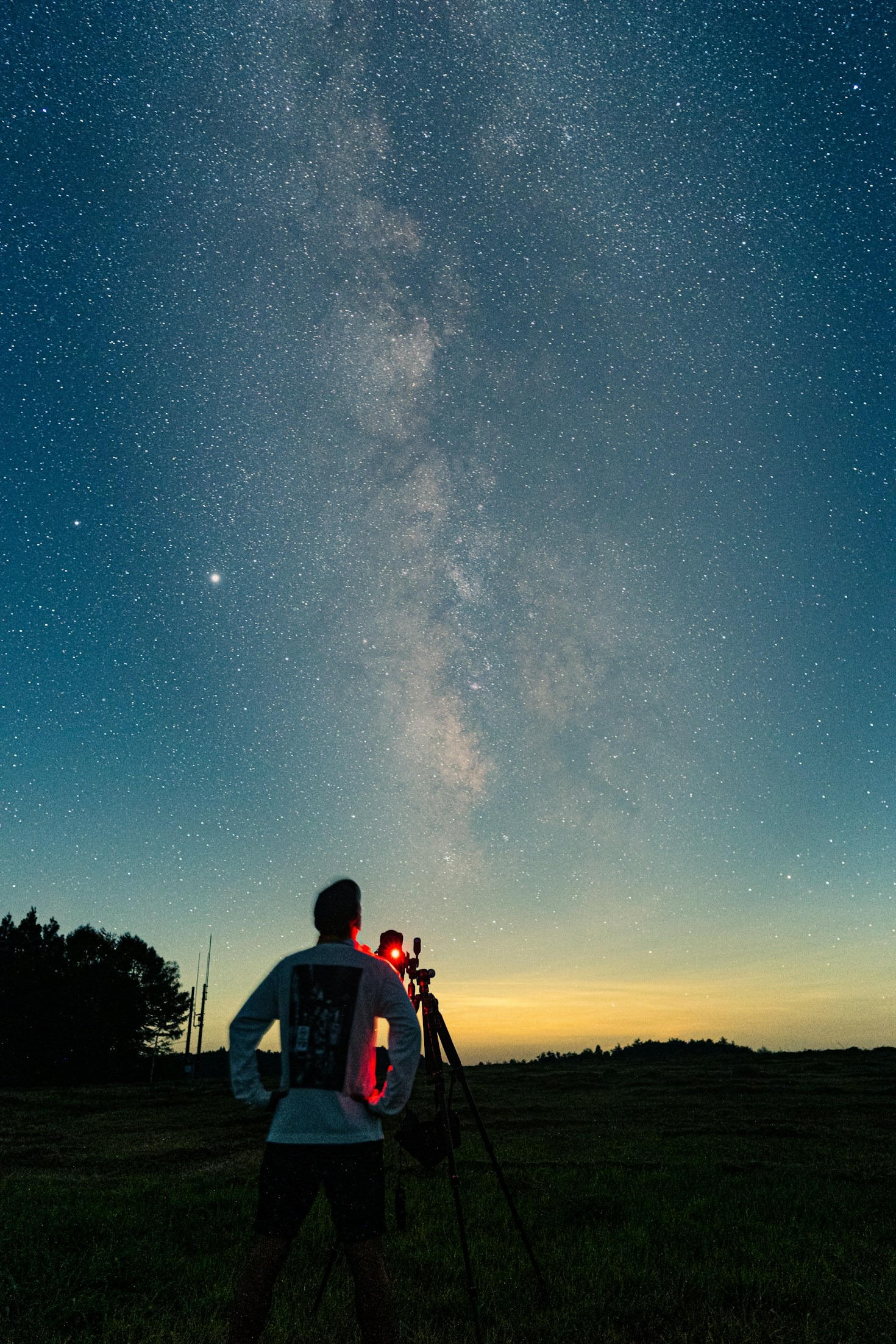
For photography enthusiasts, capturing the beauty of this galaxy is an unforgettable experience. The combination of the serene night, scattered stars, and the spectacular band of the Milky Way stretching across the sky creates an extraordinary scene.
Why Is Milky Way Photography So Special?
The Milky Way is far more than just a cluster of stars. It is the core of our galaxy, visible to the naked eye in certain locations with minimal light pollution. Every time we successfully capture it in a photograph, there’s a profound sense of awe that words can hardly describe. The technical challenges of photographing the Milky Way—like camera settings, composition, and lighting—add excitement to the hunt and make the process deeply rewarding.
When and Where Can You Photograph the Milky Way?
To see and photograph the Milky Way clearly, several factors need attention:
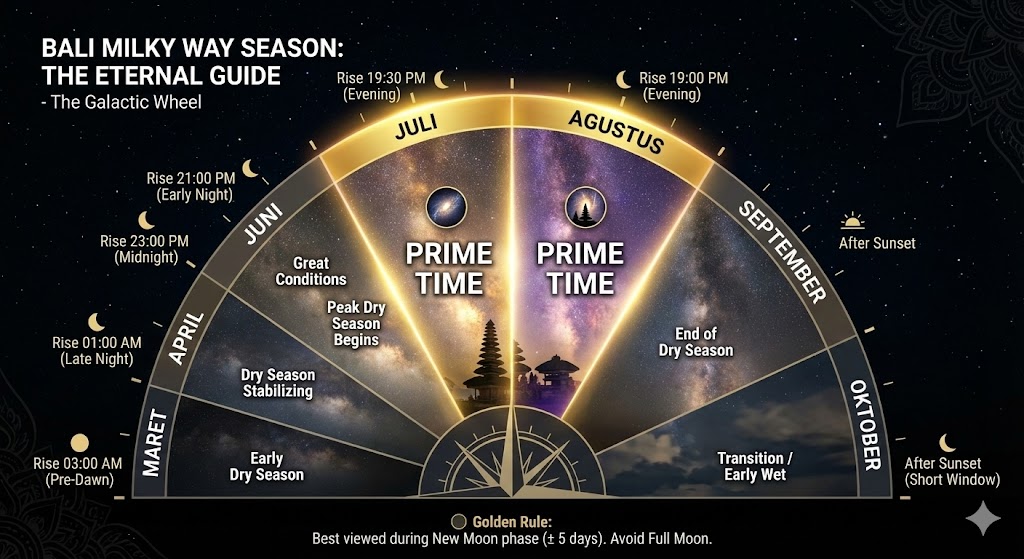
- Best Season and Timing: The dry season, from March to September, usually offers the clearest skies free from clouds.
- Minimal Light Pollution: Ideal spots are far from urban centers and artificial lights—mountainous areas, beaches, or rural landscapes are perfect.
- Moon Phase: The best time to shoot is during the new moon phase and the days surrounding it when the moonlight does not overpower the stars.
- Optimal Hours: Generally, the Milky Way becomes clearly visible after midnight until the early morning in March through May, throughout the night in June and July, and from sunset until midnight in August through October.
Join Us for a Milky Way Photography Hunt!
Capturing the Milky Way is even more enjoyable when shared with fellow enthusiasts. Hunting together lets us exchange photography techniques, ensures safety, and creates opportunities to share memorable experiences. We invite you to join us on a planned journey to find the best locations around Bali with ideal conditions for Milky Way photography.
- Goal: Locate the best Milky Way photography spots
- Time: Flexible according to weather and moon phases
- Locations: Areas with minimal light pollution (to be discussed and decided collectively)
- Recommended Gear: Cameras with manual mode, wide-angle lenses, sturdy tripods, and red-light flashlights
If you’re interested, let’s plan this adventure together! Please leave your comments to discuss the best times and places. Together, we can capture the timeless beauty of our galaxy and create unforgettable photographic journeys.
Who’s ready to hunt the eternal night light with us?
To enhance your Milky Way photography experience, remember to:
- Use apps or websites with light pollution maps and moon phase trackers to plan your outing precisely.
- Experiment with different compositions, including foreground elements like trees or rock formations, to add storytelling depth to your photos.
- Practice post-processing techniques to bring out the Milky Way’s colors and details vividly while preserving the natural look.
- Stay warm, be patient, and respect the natural environment for a safe and enjoyable night under the stars.
This guide aims to inspire and equip NightSkyIndonesia.com visitors to embark on their own celestial photography adventures with confidence and excitement.
Leave a Reply