
By Widhibek
Published June 23, 2015 | Adapted for NightSkyIndonesia.com
Monday afternoon, still somewhat sleepy, I woke to a WhatsApp notification. “Bek.. Tonight we’re heading to Tawangmangu for a photography session, want to join?” Marsono messaged, adding, “We’re going by car, so just sleep during the trip.” I replied that I had just come back from Rembang. By 7 PM, four of us—Marsono, Dwi “Kebo,” Adit, and I—were already in the car cutting through the night towards Tawangmangu. Stars visible since Solo grew denser as we left the busy city to chase the Milky Way in Karanganyar.
After a brief stop to eat at a roadside Lamongan pecel lele warung, we continued winding roads eastward. Light pollution faded as houses thinned. Approaching paddy fields near Mojogedang, Karanganyar, stars scattered vividly. We stopped briefly to capture the night sky. The Milky Way stretched north to south, already quite high. Using an 18-55mm kit lens on an APS-C camera wasn’t ideal for full capture. The camera needed to be positioned vertically to include tree silhouettes and the Milky Way expanse.
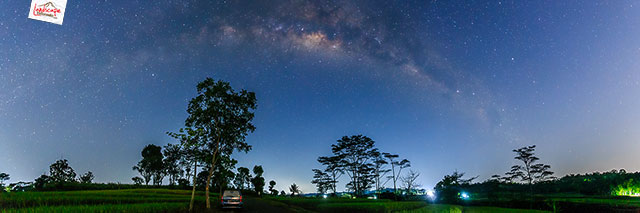
Dwi “Kebo,” passionate about his new mirrorless camera, busied himself finding the best composition at the roadside. Adit, now bitten by the night photography bug, set up his tripod camera. Marsono, usually equipped with cooking gear and ready with toast and coffee, sat cheerfully helping with flashlight illumination as we prepared equipment.
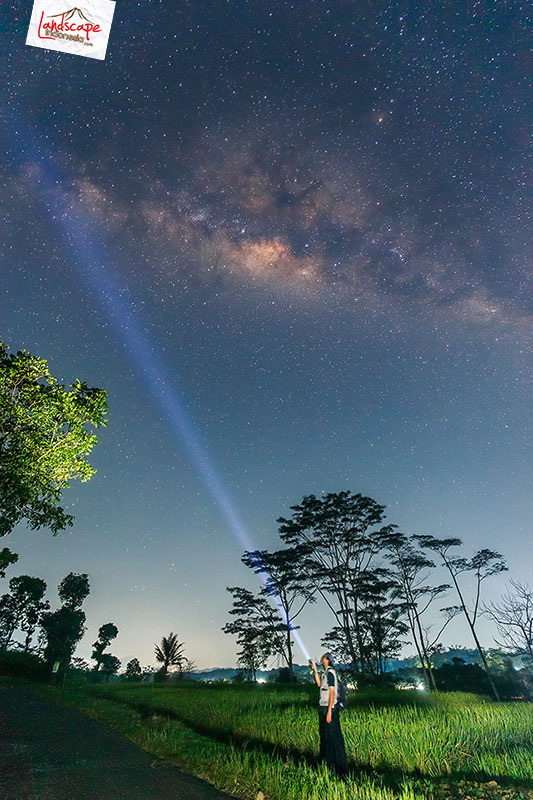
A while later, Dwi suddenly said, “Bro, full-frame cameras can show the photo immediately on the LCD, right?..” I was initially puzzled. “Mine takes a long time to process,” Adit added, demonstrating. Ah, that’s not about full-frame but noise reduction settings. If anyone experiences long LCD processing at slow shutter speeds, check if noise reduction is ON. Best turned OFF to speed shooting; noise reduction can be handled better in post-processing. ON doubles processing time during shooting.
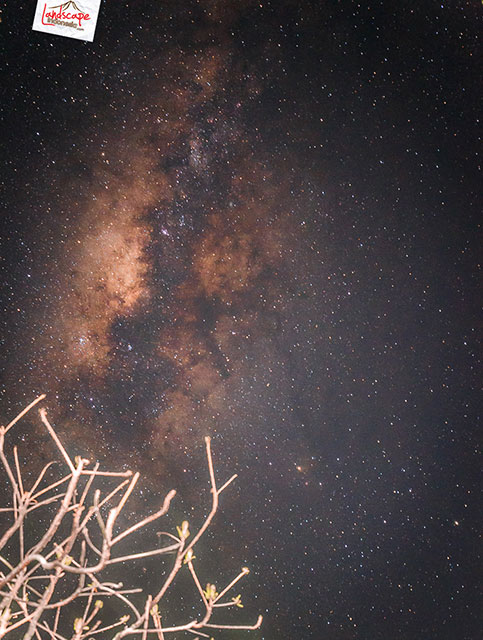
After enjoying composition experiments and ultra-wide lens trials capturing the Milky Way’s spread, we moved on to Tawangmangu. There, the Milky Way stood vertical amid dense branches and leaves.
“Shoot vertical orientation because the Milky Way is upright,” I told Adit seeing his horizontal camera position. “It’s hard to view results in vertical,” he replied, tilting his head while checking shots. “Don’t worry, camera rotation can adjust that, no more neck tilting for vertical shots!” I assured.
Soon Dwi encountered the same issue: default noise reduction ON. Both buddies spent plenty of time waiting for images rather than shooting. Also, vertical display was default tilted—laughs all around.
By hunt’s end, both had gotten faster at shooting Milky Way and no longer suffered neck strain viewing vertical shots—quite the progress!
The story vividly captures the spirit and camaraderie of night sky photography adventures, mixing technical lessons and human moments under the Galaksi Bima Sakti. NightSkyIndonesia.com invites you to explore with us.
Leave a Reply