By Widhibek
Published April 4, 2017 | Adapted for NightSkyIndonesia.com
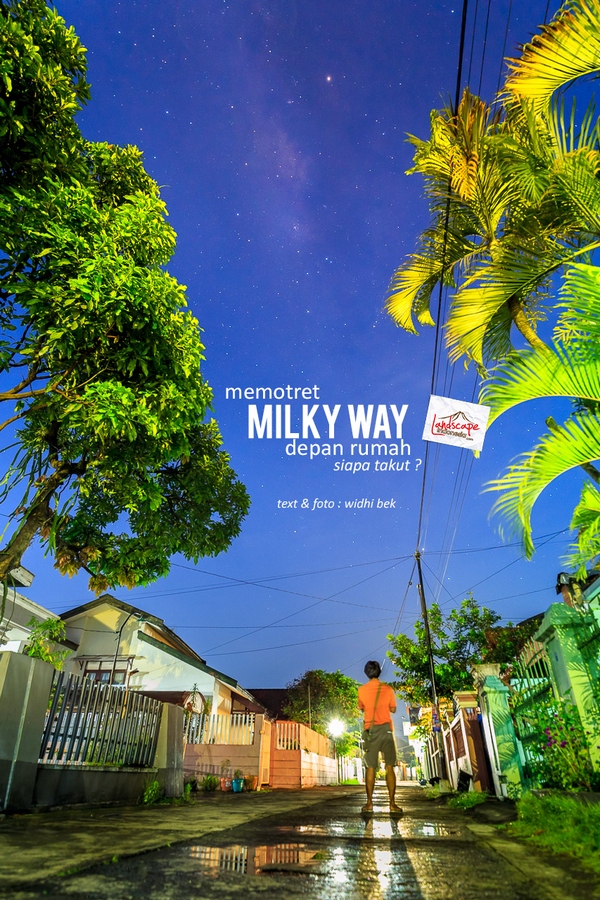
Early in learning Milky Way photography, I believed it required complete darkness—mountains, beaches, or countryside. Those outside Java sometimes enjoy Milky Way from their front yards. But surprisingly, on clear nights, you can photograph Milky Way from home too.
The more I shoot Milky Way, the more I learn. Digital camera technology makes it easier for enthusiasts.
Initially learning with Canon 450D and 10-22mm lens, limited to ISO 1600 with noise rivaling captured stars hahahaha.
Upgrading to Canon 6D simplified things. ISO up to 25,000 (usually ISO 6400), starlight capture became enjoyable. ISO 6400 noise far less than 450D.
Newer cameras excel even more. Sony A7S and A7S II reportedly compose Milky Way via live view (haven’t tried myself).
Last year, waking to see stars from my front yard, I’ve occasionally captured Milky Way. Success varies due to infrequent clear starry skies and nearby house lights complicating composition. 35mm lens limits to bright Milky Way sections.
Ideal vs. Home Conditions
Milky Way photography ideally requires minimal light pollution plus clear skies. But if unable to travel and wanting Milky Way on your sensor, trying from home is worthwhile.
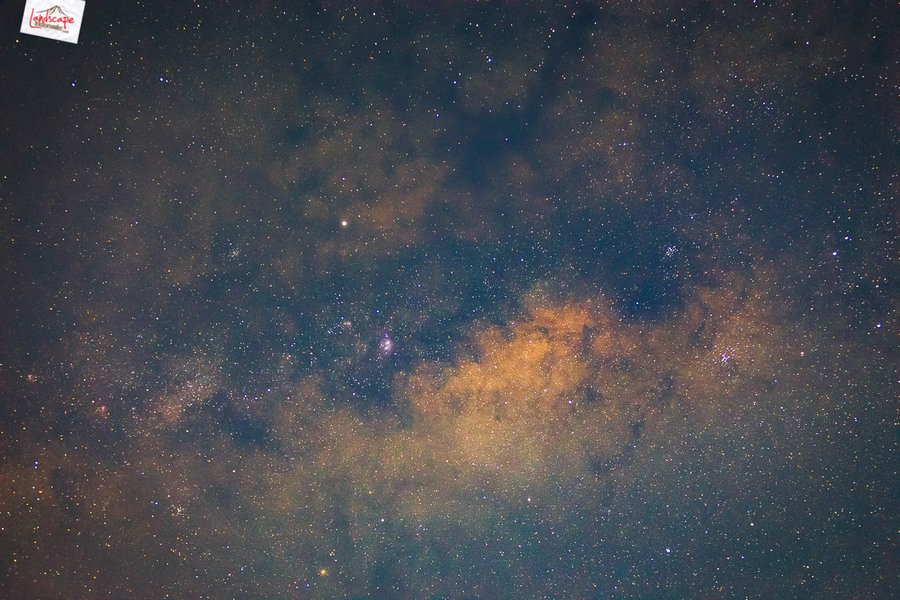
Unlike dark locations, home Milky Way’s main enemy is light leaks overpowering faint sky. Rarely seeing white Milky Way mist—mostly star dots. Smartphone apps like Stellarium (paid ~30k IDR, worth supporting developers since my first use) or free Google Sky Map help locate it.
Urban/suburban skies too bright for standard Milky Way settings (15-30s, f/2.8-f/4, ISO 3200-6400). Those overexpose the sky.
Exposure varies by location, lens focal length/aperture, and light interference.
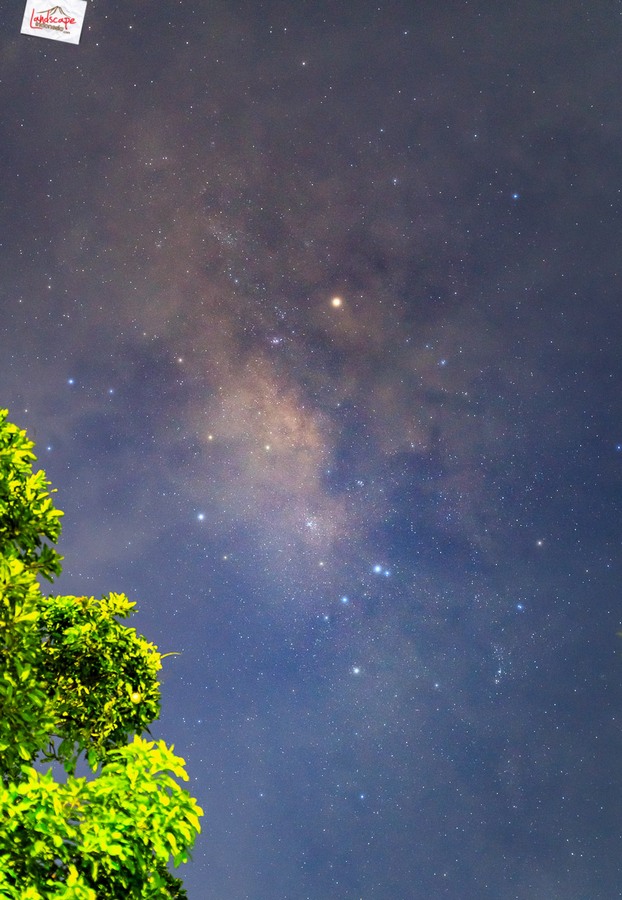
Example: Recent front yard Milky Way core: 4s, f/1.4, ISO 1600 (1 stop underexposed from standard).
Wide-angle lenses struggle more—streetlights, house lights, white walls, passing motorcycles hahaha.
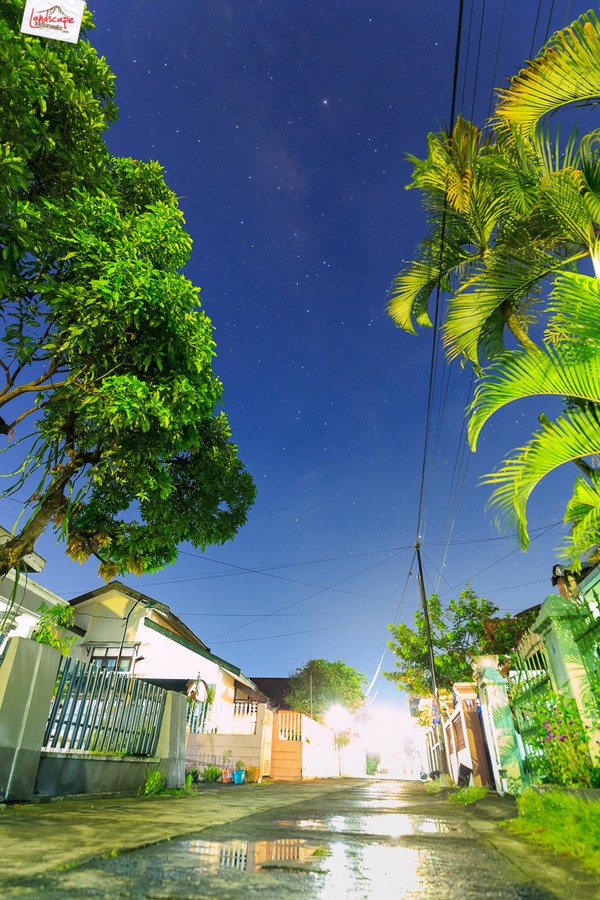
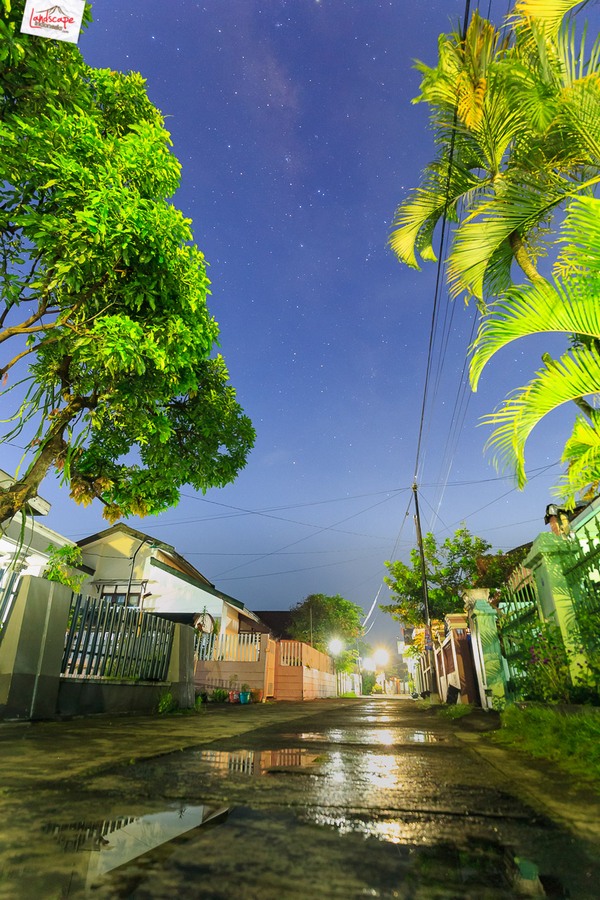
[Black card technique—imperfect but better]
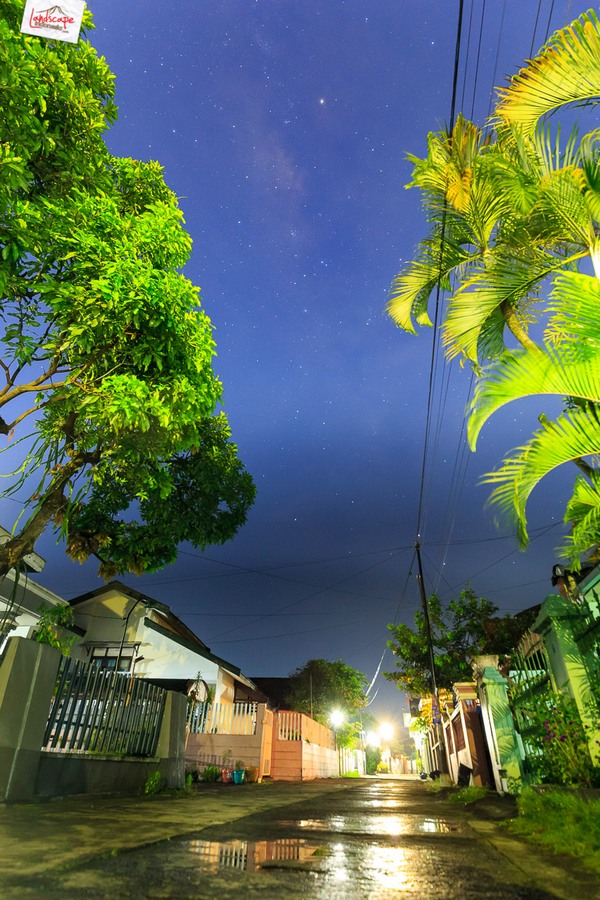
[Black card imperfect]
Solutions for Light Pollution
20s, f/4, ISO 3200 wide-angle: bottom severely overexposed facing streetlights. Solutions:
Black Card Technique (GND filter alternative): Use dark object (black paper, ATM card). Cover overexposed area. For 20s shot needing ~2-3s foreground: cover bottom with flash bag ~10s, uncover ~3s, recover. Preview, repeat if needed. Success!
Self-portrait: Single frame leaks from bright lights.
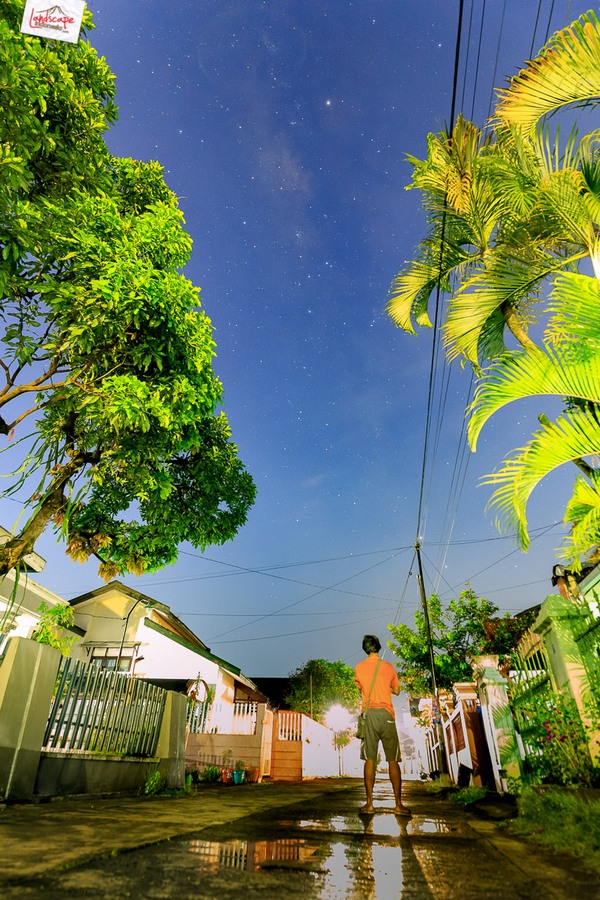
![Single frame narcissist, light leak]
Bracketing: Separate sky/foreground exposures, blend in editing. Standing photo comparison: bracketing better.
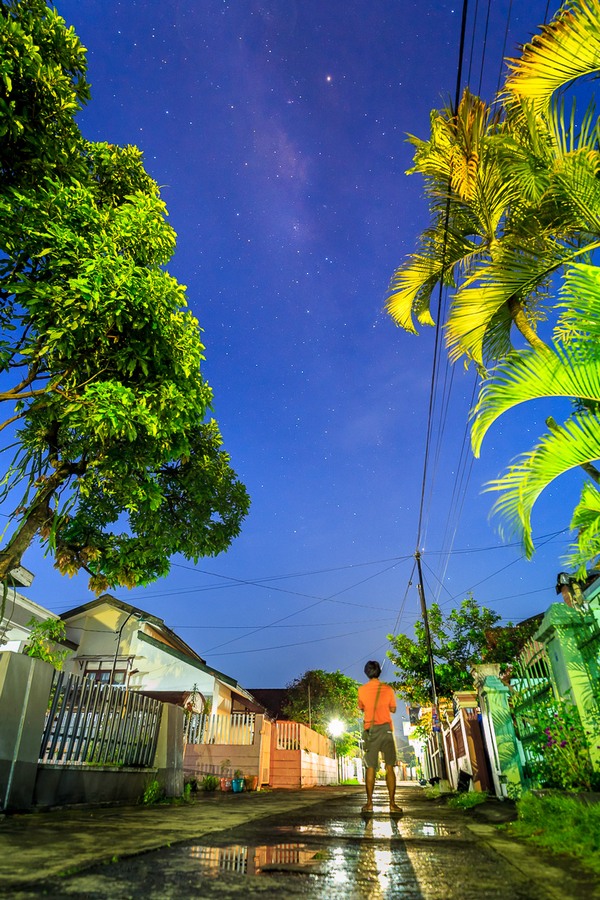
![Bracketing top/bottom handles high contrast well]
Expectations
Don’t expect home Milky Way matching dark-sky locations.
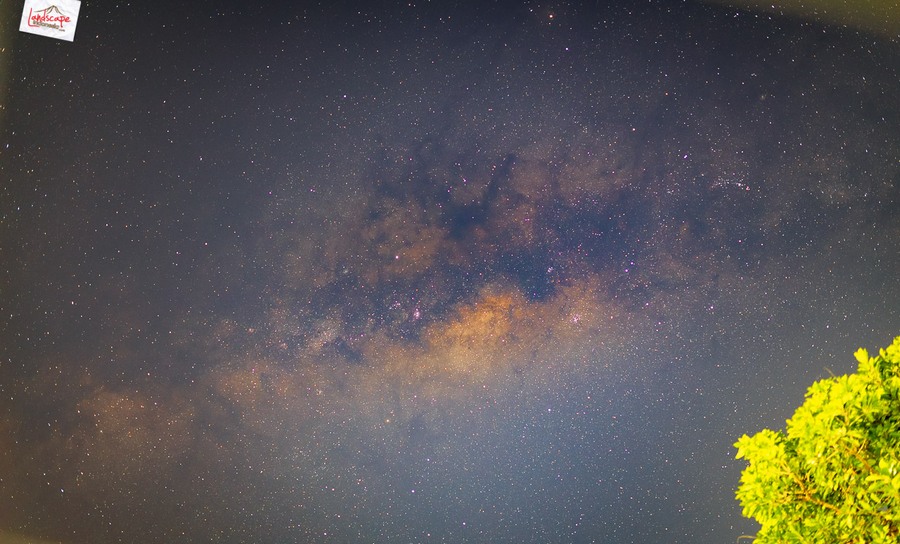
[Milky Way over front yard tree]
Easy—no travel needed! But wild camping sensations differ completely. What hooks me: wilderness camaraderie. Tripod set, intervalometer running, friends chatting over snacks/hot drinks under starry skies connecting us to nature.
For now, while awaiting clear weather, enjoy front yard Milky Way hihihihi..
NightSkyIndonesia.com proves Milky Way accessible everywhere—even home—with creativity overcoming light pollution.
Leave a Reply